

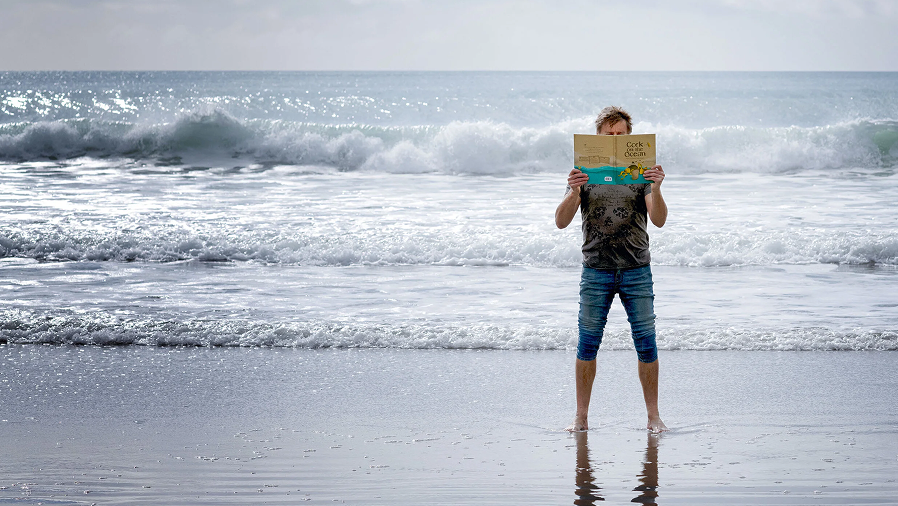
Kia ora and welcome back to the show. Today we're joined by award-winning children's book author Mark Somerset. Mark, could you start by introducing yourself and sharing about how you first found your way into the world of writing picture books?
G'day Rich, thanks for having me on the show. Yeah, it started a long time ago. I was writing little kids’ books and short stories when I was really young, around 10 or 11. I put that aside through school and career, as I was driven into maths and all those things that are not quite so interesting. Back into my imagination in my teens, I started writing mostly songs. I got really into musicianship and writing music, and then in my late 20s, I actually wrote a short story about a little boy wanting to cross a river to get to a beautiful cherry tree. It was all about dreams, following your heart, being brave. It really resonated with me, and I thought, maybe I could turn this story into a picture book.
So that was really the start of it. And I met someone who ended up illustrating that book. How did that come about?
It wasn't the first book we published, but it was how I found my way into that world. I loved creating shorter stories, concise, with a message or a bit of a laugh. That led to my first book. I was sailing from the Rorty Islands with Rowan, who illustrated the book, to Tana in Vanuatu, and we got caught in a big storm. We were blown off course and at sea for 62 hours instead of the planned 27. I was seasick and thinking, just be like a cork, go with the flow. That metaphor about life being like corks on the ocean started looping in my head. By the time we reached land, I had a couple of stanzas about being trapped in storms and what it is to be free of them, and it turned into a book—a little meditation on life, courage, and kindness.
How long did you know before you were going to write the second book?
Cork on the Ocean was published in 2006, so 19 years ago. Within the first year of Cork coming out, I had ideas about a sequel. While the first book is about a hero’s journey, the sequel explores relationships—two people travelling together. Looking back, I realise these picture books helped me explore the human condition, love, individuality, and relationships, in a way relatable to children as well.
And what did it feel like when you first held that book in your hands?
I can’t really remember the feeling. I do remember receiving 5,000 hardcover books and thinking, okay, now I’ve got to start selling these. It was always an anxious moment. I probably went straight into thinking about marketing and distribution. We managed to get through those first 5,000 books in just under two years, which gave us the encouragement to continue. And from then to now, you’ve just released the new book, Because You Were You. Can you tell us a bit about that?
Tell us about Because You Were You.
It’s a story about a little mouse with big dreams and a very unconditionally loving mother. The idea was sparked 15 years ago in response to Baba Smart Sheep, our best-known book. I wanted to explore individuality, unconditional love, and remind parents how precious their children’s imaginations are. It’s about nurturing and loving them in our busy lives.
You manage to balance writing books that both children love and adults enjoy. How do you achieve that?
I guess it’s partly luck. Over time, I’ve learned what makes an accessible children’s book—32 pages, under 500 words, concise. But I also try to craft something relatable to adults, with underlying layers, humor, and subtle nuances, much like a good picture book where illustrations add depth. So while they appear as children’s books, adults can enjoy deeper meanings too.
What does your creative process look like now?
Completely ill-disciplined. I spend little time writing actual words, but a lot of time in my imagination, thinking about storylines, characters, gags, and tweaking ideas. Writing might only take five or ten minutes at a time, but editing takes hours—moving words around, perfecting rhythm, cadence, and boiling the story down to its essence.
How do you approach finding an illustrator?
In the past, Rowan, my ex-partner, illustrated the first few books. For Because You Were You, I met Dean at a market stall. We collaborated and produced beautiful artwork. Scholastic then approached me, and I worked with them on the selection. It’s been exciting collaborating with creative people and having a say in the process, even with publishers involved.
How have you connected with young readers over the years?
I used to do school visits, library readings, book events, and tours. I still run a market stall in Queenstown most weekends, which allows me to meet readers directly. My website also receives visits and messages from people sharing their experiences with the books.
You won the Children's Choice at the Union Museum Book Awards. Did that recognition affect your work?
It was very important. Kids voted for their favourite book, and Baa Baa won in 2011. That recognition helped with publicity and gave credibility, even internationally, at book fairs in Frankfurt and Italy. While it’s not everything, it gave a boost and opened doors.
Do your stories carry philosophical threads?
Yes. Baba, for example, conveys messages about critical thinking, paying attention, and questioning information. Two Little Bugs explores emotions, empathy, and perspective-taking. Cork stories and other books also explore bravery, individuality, and compassion, in ways accessible to children but with deeper layers for adults.
For aspiring authors, what advice would you give?
Write because you love writing. Don’t rely solely on AI or external pressures. Your writing is a deeply personal exploration of understanding yourself and the world. Enjoy it, play with it, and write for yourself first. Then share it if you wish, deciding between independent publishing or traditional routes based on your goals.
What makes a brilliant children's book?
It’s the marriage between pictures and words. The narrative must work, and the illustrations should convey depth and additional layers. Because You Are You, for example, required a more detailed, imaginative art form compared to the quirky, character-driven Baa Baa books. A great picture book is concise, with a strong character arc, and illustrations that enhance the story.
What are you working on next?
I’ve completed a 43-stanza poem called The Bog Man, Prince and the Butterfly Queen. It’s a mythological fairy tale exploring masculinity, femininity, love, greed, and consciousness. It’s been 10–12 years in the making. Now I need to decide how to publish it, as it won’t fit with a children’s publisher. It’s been my favorite creative journey so far.
Where can people find your work?
On my website: marksommerset.com. It has poetry, musings, and all my books. Definitely worth checking out, and people can contact me through the site.
Thanks so much, Mark. Any final words?
Great to talk with you, Rich. Always a pleasure.
 Previous


